

Our Mission & Advocacy
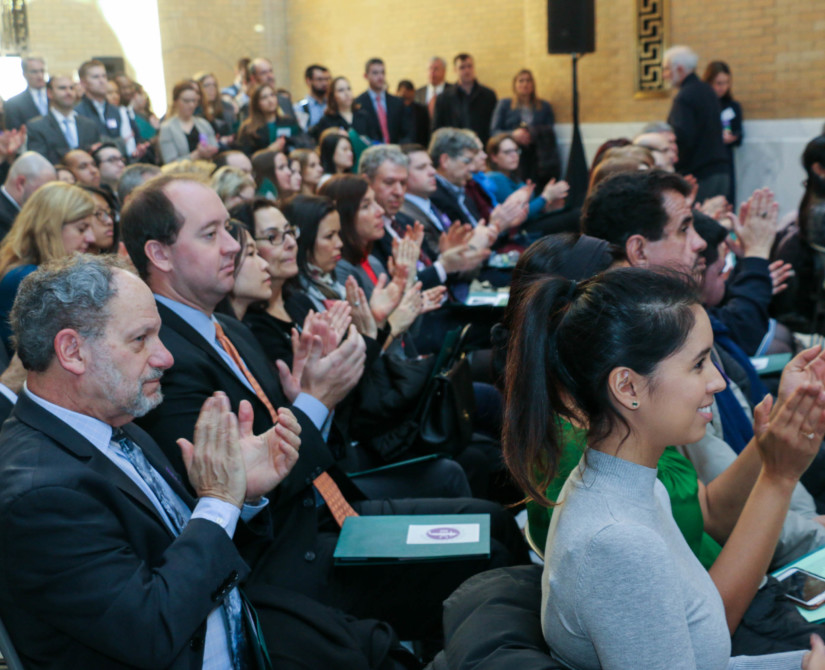


The Boston Bar Association (BBA) is the Commonwealth’s premier legal association, home to over 15,000 members and 140 institutional partners consisting of law firms, corporations, government agencies, legal aid organizations, and law schools.
We are a collaborative and solutions-oriented convener, welcoming all stakeholders to discussion and debate. We bring people together to exchange ideas, build relationships and expand professional networks. Governed by a Council of 34 leaders from the legal profession, we are also guided by the expertise of hundreds of volunteers across dozens of practice areas and industries.
Mission Statement
We work to advance the highest standards of excellence for the legal profession, facilitate access to justice, foster a diverse and inclusive professional community, and serve the community at large.
Our Values: Excellence, Justice, Service, Diversity
We Believe:
That education and leadership development is a career-long pursuit.
We provide a professional home for our members, offering the tools needed to succeed across the span of a lawyer’s career. We host more than 400 programs in all areas of substantive legal practice, planned by volunteers who are experts in their fields.
That no one in need of legal aid should be turned away based on inability to pay.
We strive to facilitate connections between lawyers and the people who need them. We provide pro bono training to equip lawyers with the knowledge and tools they need to represent people who require specialized legal services.
In empowering legal service organizations in Greater Boston.
Each year, the Boston Bar Foundation provides grants to Boston-area legal services groups who are dedicated to expanding access to justice and improving our community.
That justice is best advanced when the legal community reflects the diversity of the community it serves.
We work in partnership with seven affinity bar associations to welcome diverse law students and new lawyers into the profession and connect them with opportunities for growth and leadership.

Our Advocacy Work
Whether working with legislators on technical changes to improve the law, mobilizing resources against threats to civil rights and civil liberties, promoting public safety and ensuring fair treatment of all citizens, or advocating for adequate funding for civil legal aid and the courts, we bring stakeholders together to make change a reality.
Our Focus
Access to Justice
- Supporting the Judiciary
We believe in a fair and impartial judiciary free from political interference, and open and accessible courts that best serve the people of the Commonwealth. We collaborate with judges and lawyers and the legislative and executive branches to ensure that our courts have the tools and resources they need to meet their constitutional responsibilities and serve as a reliable source of dispute resolution.
Learn More About Judicial Independence - Expanding Civil Legal Aid
Through our Statewide Task Force to Expand Civil Legal Aid in Massachusetts, we brought to light the magnitude of the unmet need for civil legal aid across the state and determined the most cost-effective way to meet that need. We continue to focus on addressing this critical gap and successfully advocating for increased funding for civil legal aid.
Learn More About Civil Legal Aid - Right to Counsel
We have vigorously defended the constitutionally-guaranteed right to counsel for criminal defendants, and we continue to seek further expansion of that right to include civil matters in which basic human needs are at stake.
Learn More About Civil Legal Aid
Criminal Justice
The primary concern of a criminal justice system should be promoting public safety and ensuring fair treatment for all people. In pursuit of this goal, we have a long history of advocating for policies that are consistent, fiscally responsible, and promote the fair and impartial administration of justice in Massachusetts. We support evidence-based practices that best protect public safety and support successful re-entry for justice-involved individuals.
Civil Rights & Civil Liberties
We stand ready to oppose and mobilize resources against threats to civil rights and civil liberties. Our long record of work in this area spans the right to privacy, freedom of speech, and the balance between liberty and security. It also includes affirmative action, the right to vote, and same-sex marriage.
Children & Families
We are attentive to legislative matters regarding the care, protection, and support of children, as well as other family-related legal issues. Our work in this area includes strengthening laws to focus on the best interests and safety of children, improved standards for child support, and advocacy for parental rights in the judicial process.
Diversity, Equity & Inclusion for All
We are committed to building a more diverse, equitable and inclusive community, both in our society and in the profession. We recognize that the bar has not always lived up to that standard, but we strive to build on our past work and partner with others to help make the legal community in Boston more welcoming and supportive for all. Our “Highlights of BBA History: A Timeline to a More Inclusive and Diverse Community,” chronicles our Diversity & Inclusion efforts dating back to 1969.
Immigration
We believe that the rights of immigrants must be protected and upheld and that no one’s human dignity should be devalued on the basis of immigration or citizenship status. Every person should have the full and meaningful ability to exercise their rights and to access justice through the legal system regardless of immigration, citizenship status, or economic circumstance.
Racial Justice
The BBA has a long-standing history of working to address racial disparities in our society and the law. Highlights of BBA History: Our Work Advancing Justice and Equality in our Community and Society outlines our members’ work from the community level to the federal level on issues including affordable housing, LGBTQ+ rights, and racial justice.